
Kitchen surfaces take daily wear from cooking, cleaning, and constant use. Choosing the right one can impact both style and function. Granite countertops remain a popular choice, but many homeowners still compare them with quartz, laminate, and other materials before deciding.
This guide breaks down how granite compares to other surfaces, helping you understand durability, appearance, and maintenance so you can choose what works best for your space.
Quartz is often seen as the main alternative to granite. Both offer strength and visual appeal, but they differ in key ways. Granite is a natural stone, which means every slab has unique patterns and colors. Quartz, on the other hand, is engineered, giving it a more uniform look. If you want a one-of-a-kind kitchen design, granite is a standout choice. In terms of durability, both surfaces resist scratches well. However, granite handles heat better, making it ideal for busy kitchens. Quartz can be sensitive to high heat, which means hot pans may cause damage over time.
Maintenance is another difference. Granite requires sealing to protect against stains, while quartz does not. Still, many homeowners prefer granite for its natural beauty and long-lasting performance.
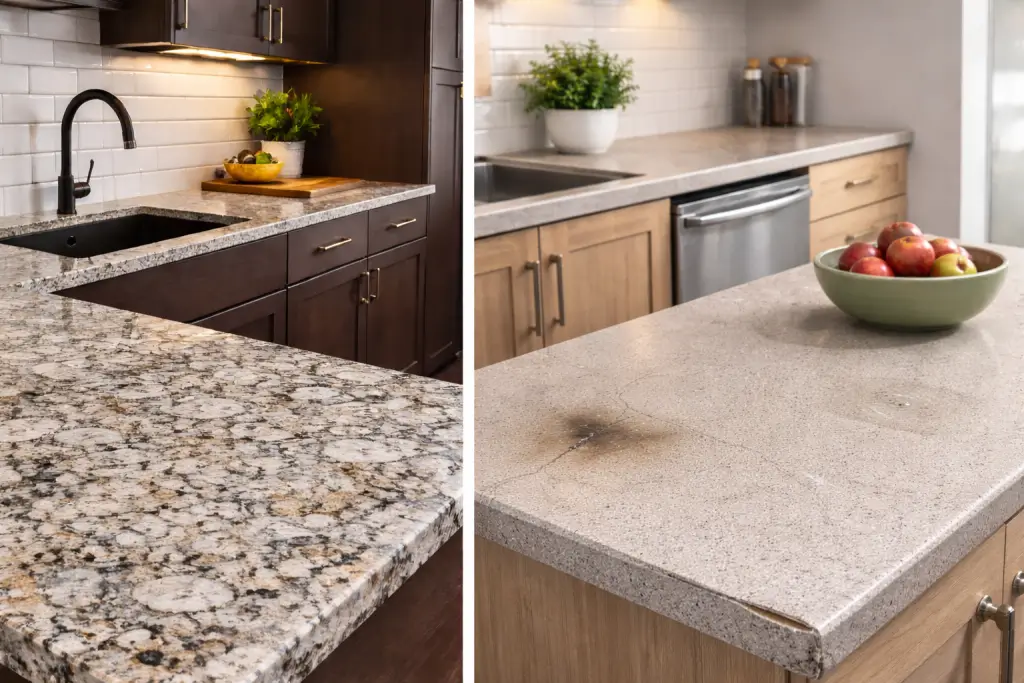
Laminate countertops are often chosen for their low cost, but they do not match the strength of granite. Granite countertops resist scratches, chips, and heat, making them suitable for long-term use. Laminate surfaces can peel, scratch, or burn more easily, especially in high-traffic kitchens.
Appearance also plays a major role. While laminate can mimic stone, it lacks the depth and texture of real granite. Over time, laminate may fade or wear, while granite maintains its polished look with proper care.
For homeowners planning a long-term kitchen upgrade, granite often provides better value despite the higher upfront cost.
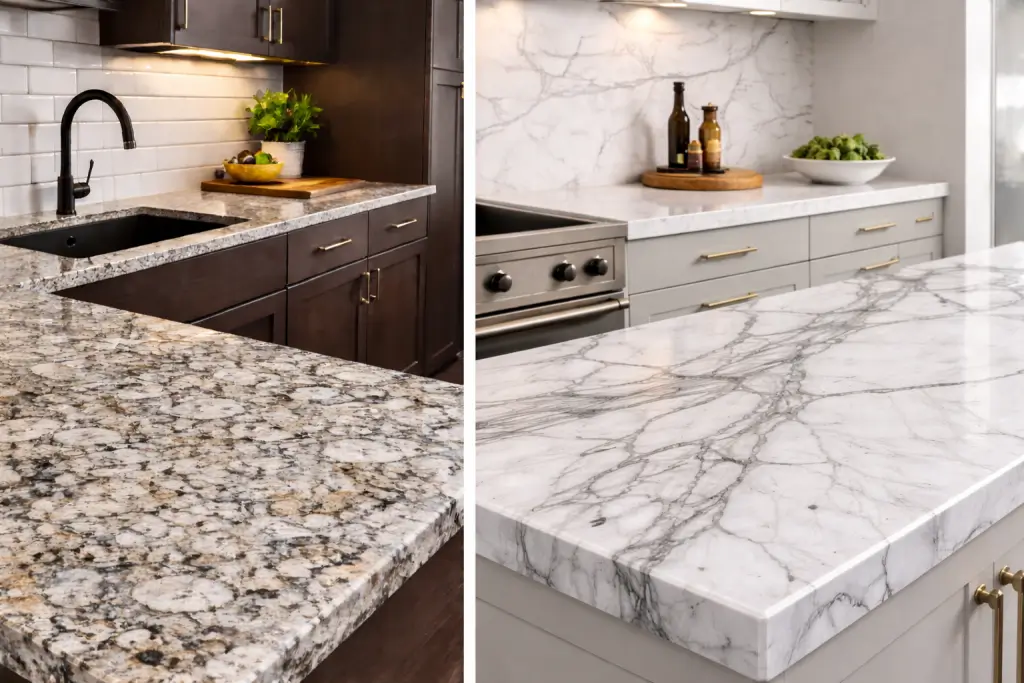
Marble is known for its elegant appearance, but it requires more care than granite.
Granite countertops are harder and more scratch-resistant. Marble is softer, which means it can scratch or stain more easily. This makes granite a better option for kitchens with frequent use. Maintenance is another key factor. Marble needs regular sealing and careful cleaning to prevent stains. Granite also requires sealing, but it is generally easier to maintain.
While marble offers a classic look, granite provides a balance between beauty and strength, making it a practical choice for many homes.
Granite countertops continue to stand out for several reasons:
These features make granite a reliable option for both style and function.
If you are planning a kitchen upgrade, you may also want to explore full kitchen remodeling services
to complete the space.
Keeping granite in good condition is simple with the right care:
With regular care, granite countertops can maintain their look for many years.
The best surface depends on your needs and lifestyle.
Granite countertops are ideal if you want durability and natural beauty. Quartz works well for low maintenance, while laminate suits tighter budgets. Marble may appeal to those who prefer a softer, classic style.
Think about how often you cook, your budget, and the look you want to achieve. These factors will help guide your decision.