
Kitchen islands are among the most used features in modern homes, and they need surfaces that can withstand daily wear without losing strength or style. From food prep to casual meals, these surfaces see constant use. Choosing the right material helps prevent damage, reduces maintenance, and keeps the kitchen looking great for years. This guide explains how to select the best surface for kitchen islands based on durability, use, and long-term value.
Kitchen islands often serve multiple purposes at once. They act as prep stations, dining tables, homework spots, and gathering areas. Because of this, island surfaces face more spills, heat, and impact than most other countertops. A durable surface helps:
When surfaces are chosen without considering daily use, repairs or replacements become more likely.
Quartz is one of the top choices for kitchen islands due to its strength and ease of care. It is engineered to resist moisture, stains, and surface damage, making it ideal for busy kitchens. Key benefits include:
Quartz surfaces are ideal for families who cook often and want a long-lasting solution that stays attractive with minimal upkeep.
Granite remains a popular natural stone for kitchen islands because of its durability and natural appearance. Each slab has unique patterns, which adds character to the kitchen. Granite offers:
While granite does require periodic sealing, it performs well in kitchens where cooking and food preparation happen every day.
Marble is known for its elegance, but kitchen islands with marble surfaces need more care. Marble is softer than quartz or granite and can stain or scratch more easily. Marble works best when:
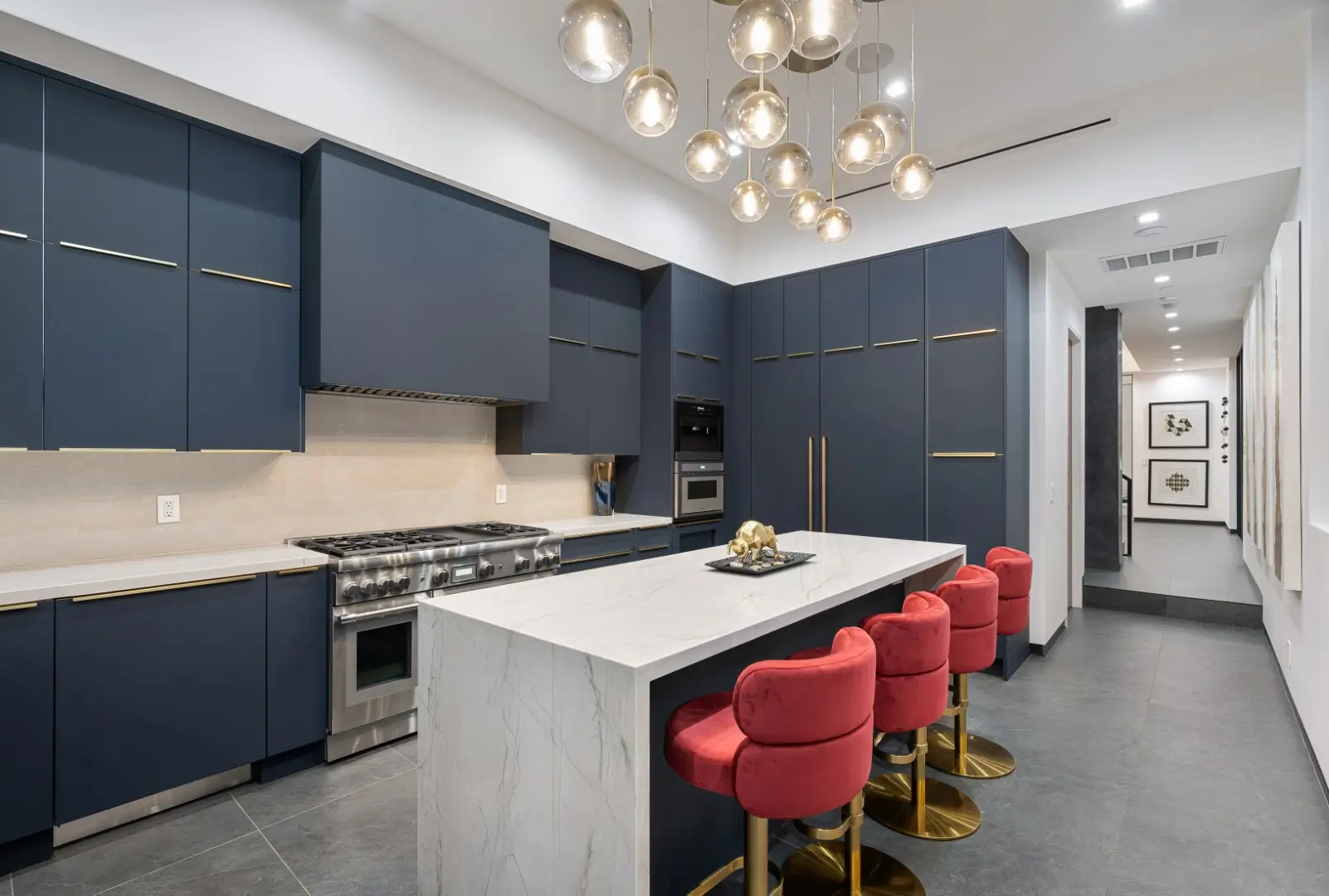
For kitchens focused on design rather than heavy use, marble can still be a suitable option.
When selecting materials for kitchen islands, durability should be a top concern. Daily use places stress on surfaces, especially in households with children or frequent guests.
Durability ranking for daily activity:
Higher durability materials reduce maintenance needs and extend the life of the kitchen island surface.
Edge styles affect both appearance and function. Kitchen islands benefit from edges that resist chipping and improve safety. Common edge styles include:
Rounded edges are often recommended for households with children, while clean edges suit modern kitchen designs.
Surface thickness plays an important role in performance. Thicker slabs add strength and create a more solid appearance for kitchen islands, especially larger designs. Benefits of proper thickness:
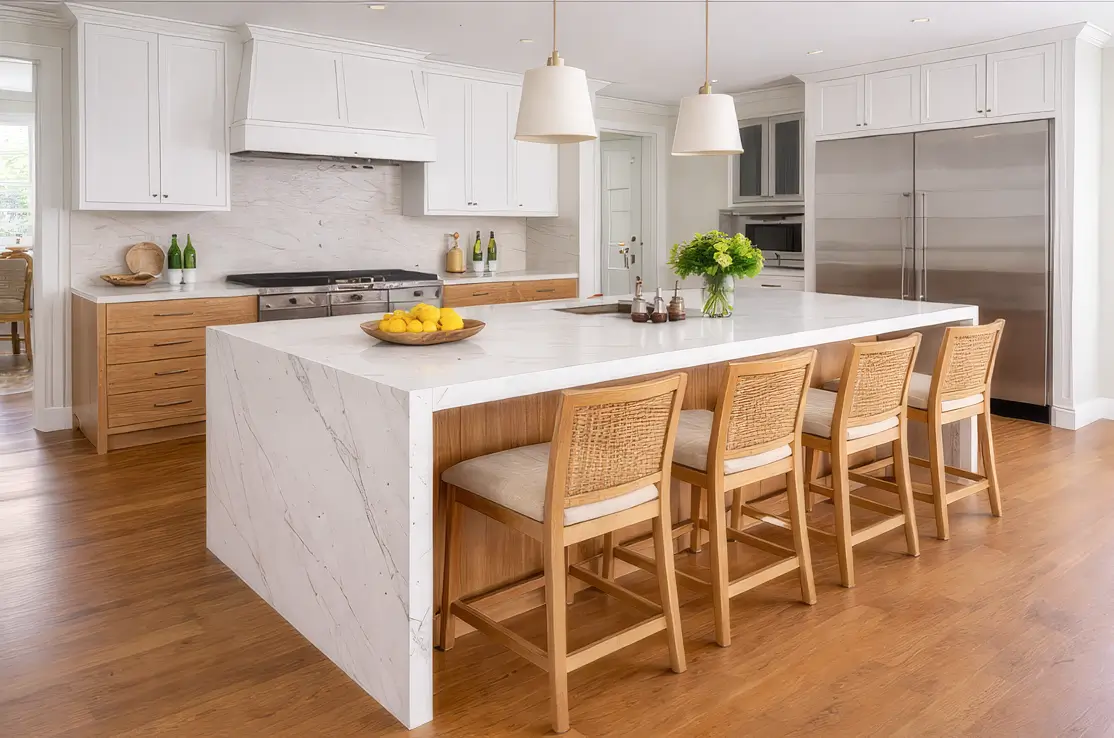
Proper installation and support beneath the surface are just as important as the material itself.
Even durable surfaces need proper care. Kitchen islands last longer when simple maintenance habits are followed. Helpful tips include:
Regular care protects surfaces from damage and keeps them looking new.